

Hollywood loves a wild tale, but sometimes historical events are stranger than anything a screenwriter could invent. In 1985, a bizarre series of events in the American South linked a former narcotics officer, a botched smuggling drop, and a wild animal. The result was a story that would eventually capture the world’s attention decades later.
If you have been searching online for the creasy bear true story—a quirky internet nickname mashup blending the famous bear with pop culture characters—you are actually looking for the infamous “Cocaine Bear.” What started as a local news oddity eventually morphed into a blockbuster film, leaving many people wondering how much of the movie actually happened.
While the cinematic version features a rampaging apex predator, the actual events from the 1980s are much more grounded, and far more tragic for the animal involved. Here is the real history behind the legendary bear.
The Smuggler and the Missing Duffel Bag
The story begins with Andrew C. Thornton II, a Kentucky narcotics officer who eventually crossed the law to become a leader in a local drug-smuggling ring. In the fall of 1985, Thornton was flying a small plane loaded with millions of dollars worth of cocaine. Believing the authorities were tracking him, he set the plane on autopilot and began throwing duffel bags of the illicit substance out of the aircraft over the Chattahoochee National Forest in Georgia.
Thornton then attempted to parachute to safety. Unfortunately for the smuggler, his parachute failed to open properly. He fell to his death, landing in a driveway in Knoxville, Tennessee, wearing a bulletproof vest and carrying thousands of dollars in cash. Meanwhile, his abandoned cargo landed deep in the Georgia wilderness.
The Bear’s Tragic Fate
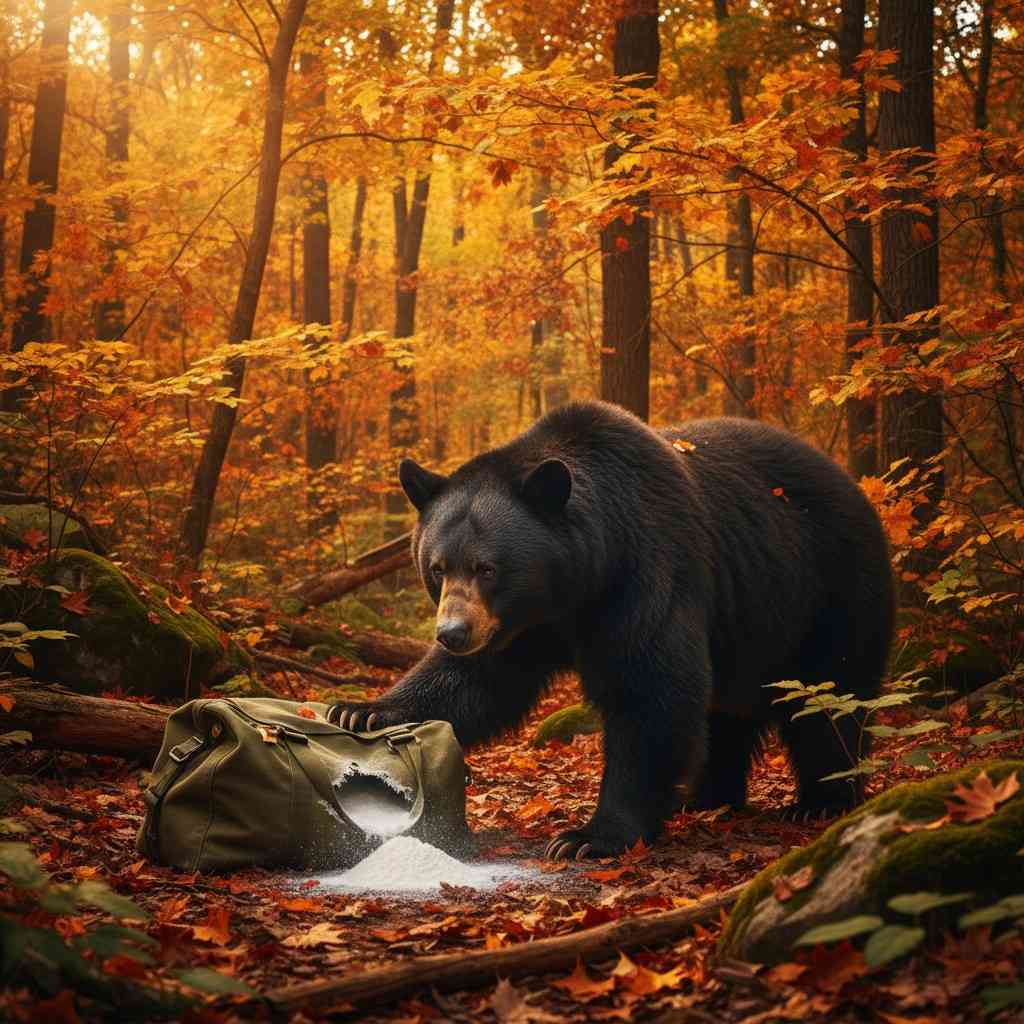
Months later, investigators searching for the missing drugs stumbled upon a grim scene. A 175-pound female American black bear had found one of Thornton’s dropped duffel bags.
The bear had ripped open the packages and ingested a massive quantity of the drug. According to the medical examiner who performed the autopsy, the bear’s stomach was packed to the brim with cocaine. The animal suffered a severe overdose, experiencing cerebral hemorrhaging, respiratory failure, and heart failure. Experts estimate the bear died within 45 minutes of consuming the powder.
Hollywood Myth vs. Georgia Reality
When the 2023 horror-comedy film hit theaters, it took immense creative liberties with the 1985 incident. The movie portrays a highly aggressive beast going on a blood-soaked killing spree, terrorizing hikers, drug dealers, and park rangers alike.
In reality, the bear never harmed a single human being. There were no rampages and no cinematic showdowns in the forest. The true story is simply the sad reality of an innocent wild animal encountering toxic human contraband and dying alone in the woods.
Pablo Escobear and Cultural Impact
Despite the grim reality of its death, the bear’s story refused to fade away. The animal was eventually taxidermied and passed through several owners over the decades. Today, it is famously displayed at the Kentucky for Kentucky Fun Mall in Lexington.
Fans and tourists have affectionately dubbed the taxidermy mount “Pablo Escobear.” This physical monument, combined with viral internet fame and a major Hollywood movie, has cemented the animal’s bizarre legacy in modern pop culture. It stands as an iconic piece of 1980s true crime lore.
A Bizarre Chapter in American History
The saga of the 1985 Georgia black bear remains one of the most unusual footnotes of the American drug war. A corrupt cop, a failed parachute jump, and an innocent forest creature all collided to create an unbelievable narrative. While the movies will always favor explosive fiction, the real history serves as a stark reminder of the unpredictable and often destructive ways human activities impact the natural world.
