

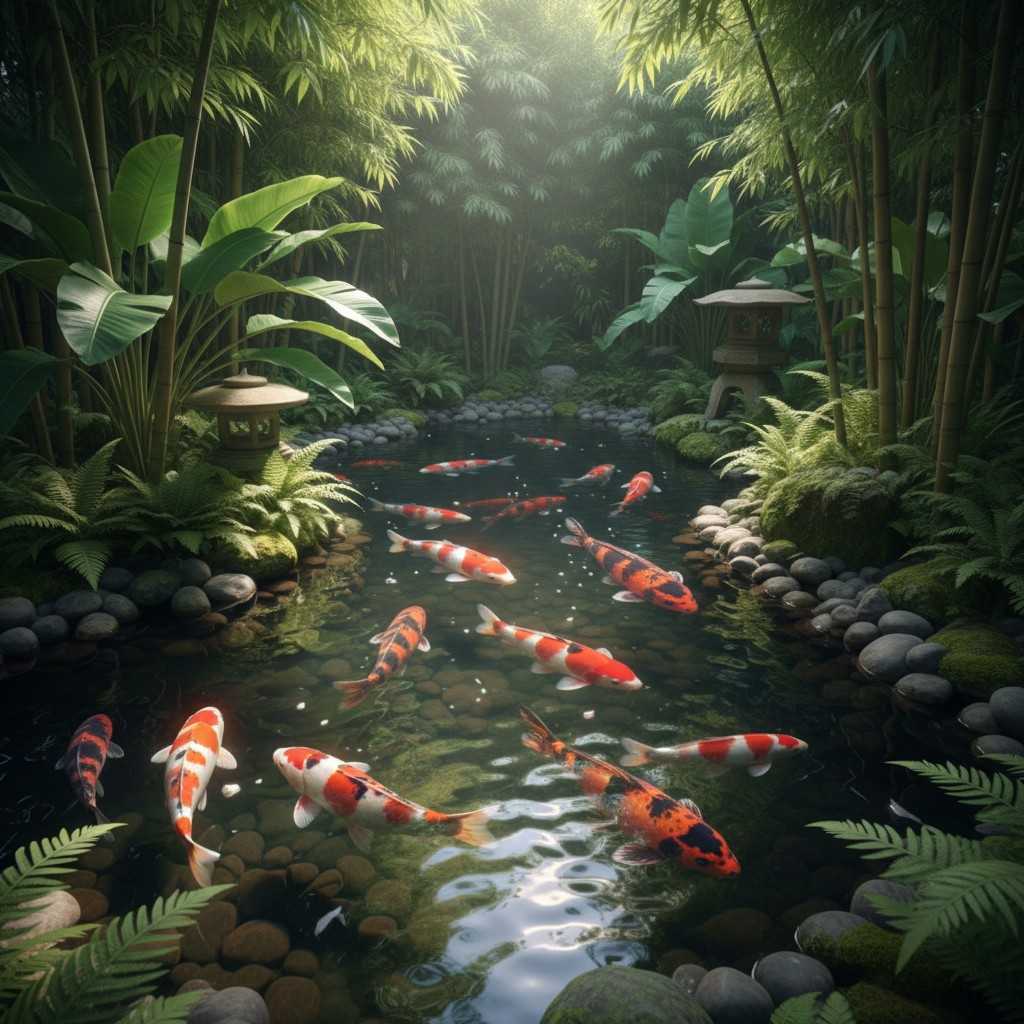
Gaze down into a pristine backyard pond, and you are likely to see a dart of vivid orange, white or black under the surface. Nishikigoi (koi fish), not an ordinary carp, developed into a living jewel that was treasured by Japanese nobles during the Heian period. However, nowadays they are a universal symbol of luck, ambition and persistence.
The first step in constructing a successful basin is to know precisely what lies within it. Each type has its own history, color choice and scale pattern.
Today, you can learn more about the most beloved koi varieties and a few of the rarer types in this guide to choosing those perfect backyard fish.
Common Types of Koi Fish
Enthusiasts categorize koi based on their base colors and marking patterns. Here are five of the most recognizable varieties you will find in water gardens around the world.
Kohaku
The Kohaku is the most famous koi variety in Japan. These fish feature a pure white body adorned with striking red markings. Breeders highly value a bright, snow-white base, as it makes the deep red patches pop vividly under the water.
Sanke
Also known as Taisho Sanke, this variety looks very similar to the Kohaku but features the addition of small black spots. Sanke koi possess a clean, elegant white base that highlights their red and black markings.
Showa
People often confuse Showa koi with Sanke. However, a Showa fish is actually built on a solid black base. Red and white patterns overlay this dark foundation, giving the Showa a much bolder and heavier appearance than the delicate Sanke.
Asagi
If you want to step away from the standard red and white fish, the Asagi is a beautiful alternative. They showcase distinctive blue-grey scales across the top of their bodies. Vibrant red coloration tightly lines their sides, cheeks, and bellies, creating a stunning visual contrast.
Utsurimono
Utsurimono koi feature a deep black base covered by a single accent color. The most common accent colors are bright white, deep red, or rich yellow. The alternating dark and light patches often resemble a checkerboard pattern.
Rare and Unique Koi Varieties
Beyond the standard categories, breeders have developed several fascinating mutations that alter a fish’s scale texture and shine.
Doitsu
Originating from a crossbreed between Japanese koi and German carp, Doitsu koi are completely scaleless. Some Doitsu fish feature a single, defining row of large mirror scales running exclusively along their dorsal line.
Ginrin
Ginrin koi literally sparkle in the sunlight. Their scales contain a highly reflective, metallic pigment that flashes like a diamond as the fish swims. Almost any color variety of koi can be bred with Ginrin scales.
Shusui
The Shusui is simply the Doitsu version of the Asagi. They display the same blue-grey and red coloring, but their lack of scales gives their skin a smooth, mirror-like finish.
Factors to Consider When Choosing Koi
Selecting the right fish requires more than just picking your favorite color. Keep these critical factors in mind before purchasing your new aquatic pets.
Pattern, Color, and Body Shape
When evaluating a fish, look for deep, uniform colors. The edges between different color patches should be sharp and well-defined rather than blurry or faded. A healthy koi will also possess a thick, torpedo-shaped body that tapers smoothly toward the tail.
Size and Pond Environment
Koi grow remarkably fast. A tiny fish measuring just four inches long will grow to two or three feet. You should have enough deep water, quality water filtration and swimming space in your pond for their rapid growth. As this causes stressed fish due to poor water quality, always calculate your pond capacity based on the adults size.
Dive Into the World of Koi Keeping
Koi fish each possess a genetic footprint. Since no two fish have identical markings, it is a very individualized activity.
Assess the pondset up you presently have and see if it is adequate to keep adult fish. After you have your filtration setup, head on over to a reputable local breeder and check their stock out in person. Begin your collection with a durable, traditional koi fish like the Kohaku, and see your backyard become a dynamic, living piece of art.
